

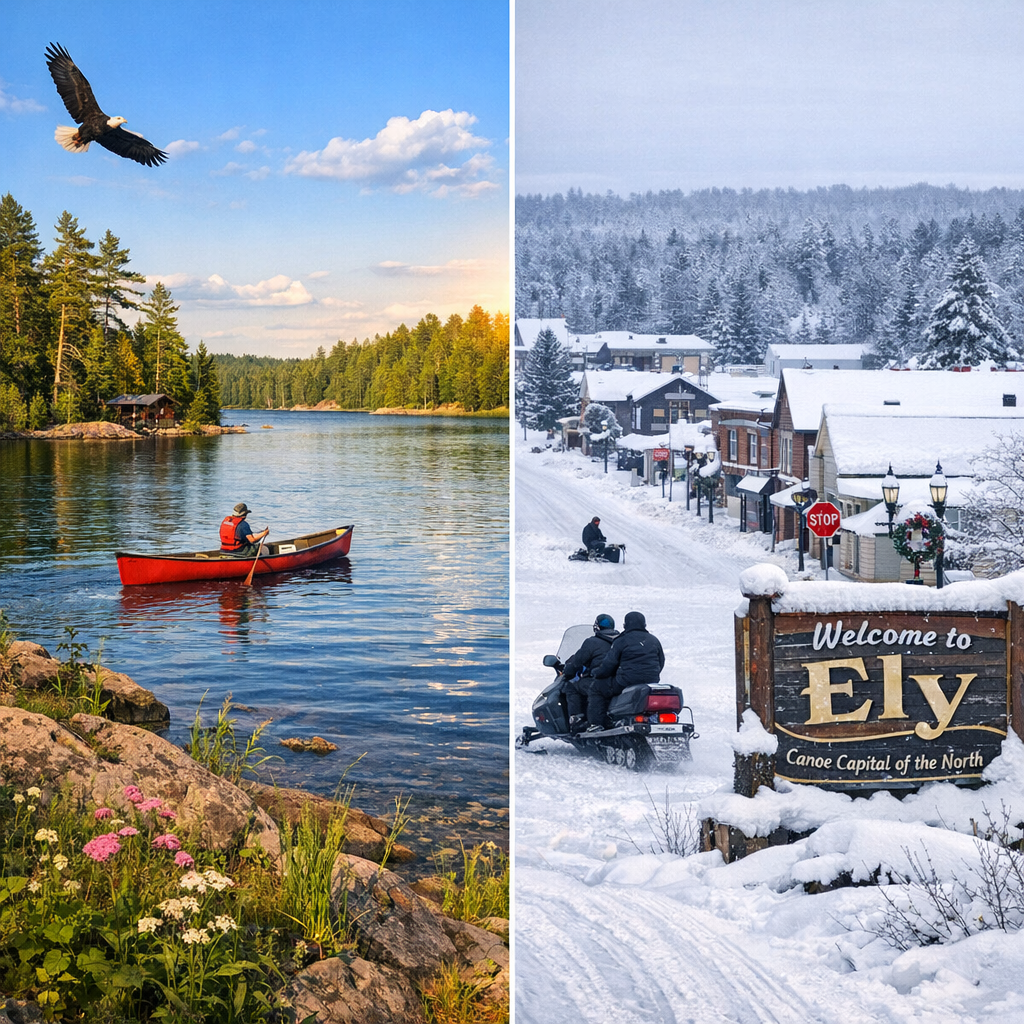
Ely, Minnesota, nestled in the heart of the Northwoods, experiences a diverse range of weather patterns throughout the year. Understanding these seasonal changes is essential for residents and visitors alike, as they influence daily activities, local ecosystems, and the broader environment.
Seasonal Climate Overview
In Ely, the summer days are long and comfortable, while the winters can be chilly and snowy. Over the course of the year, the temperature typically varies from -2°F to 77°F and is rarely below -27°F or above 85°F. Depending on the season, precipitation is common in both rainfall and snowfall, and often indicates when fish will be active or when it’s best to make other plans for dinner!
Environmental Impacts of Climate Change
Climate change is having a profound impact on Minnesota’s natural environment. Many of our state’s iconic native plants and animals—from birch trees to walleye—are threatened by warming temperatures and shifting weather patterns.
As our climate warms, Minnesota’s northern tree species like paper birch, quaking aspen, balsam fir, and black spruce may start to die out, with populations moving further north. Warmer-climate tree species, like maples, oaks, and hickories, could take their place. These changes in tree cover are accompanied by changes in wildlife and soil habitat.
On Minnesota lakes, ice coverage has declined an average of 10-14 days in the last 50 years, according to data collected by state agencies and volunteers. Since 1967, ice-in dates have moved about 9 days later on average, while ice-out dates have moved about 4-5 days earlier.
Community Initiatives and Adaptation
In response to these environmental challenges, local organizations and residents are actively engaged in conservation efforts. The Campaign to Save the Boundary Waters, organized by local residents in and around Ely, is dedicated to protecting the clean water, clean air, and forest landscape of the Boundary Waters Canoe Area Wilderness and its watershed from toxic pollution caused by mining copper, nickel, and other metals from sulfide-bearing ore.
Understanding Ely’s climate and its ongoing changes is crucial for preserving the natural beauty and ecological health of our region. By staying informed and involved, we can collectively work towards a sustainable future for Ely and its surrounding environments.