

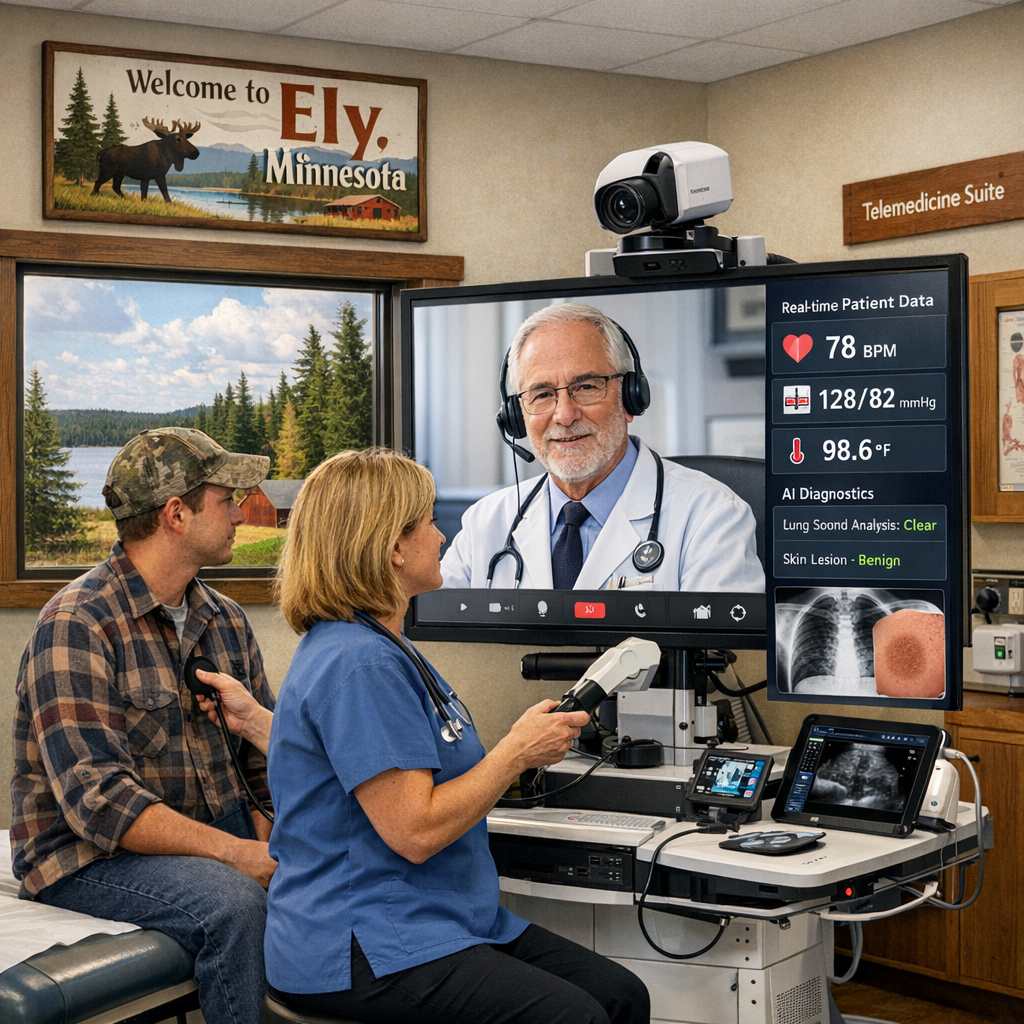
In Ely, Minnesota, residents often face challenges accessing timely and specialized healthcare services due to geographic isolation and limited resources. However, advancements in artificial intelligence (AI) are poised to transform rural healthcare delivery, offering promising solutions to these longstanding issues.
AI-Powered Telemedicine
Telemedicine has become a vital tool for rural communities, enabling patients to consult with healthcare providers remotely. AI enhances telemedicine by facilitating more accurate diagnostics and personalized treatment plans. For instance, AI algorithms can analyze medical images and patient data, assisting doctors in identifying conditions that might be overlooked in traditional consultations.
Predictive Analytics for Preventive Care
AI-driven predictive analytics can help identify individuals at risk of developing chronic diseases by analyzing patterns in health data. This proactive approach allows for early interventions, potentially reducing hospitalizations and improving overall community health. In rural settings like Ely, where preventive care resources may be scarce, such tools are invaluable.
Overcoming Infrastructure Challenges
Implementing AI solutions in rural areas requires addressing infrastructure limitations, such as limited broadband access. Investments in digital infrastructure are essential to support AI applications in healthcare. Collaborative efforts between local governments, healthcare providers, and technology companies can help bridge this gap, ensuring that communities like Ely benefit from AI advancements.
Ensuring Equitable Access
While AI offers numerous benefits, it’s crucial to ensure that its implementation does not exacerbate existing disparities. Tailoring AI solutions to the specific needs of rural populations and providing adequate training for healthcare providers are essential steps toward equitable healthcare delivery.
In conclusion, AI holds significant potential to enhance healthcare access and quality in Ely, Minnesota. By leveraging AI technologies thoughtfully and addressing infrastructure challenges, we can work toward a future where all residents receive the care they need, regardless of their location.